A global index of 180 countries has placed India 145th in regards to water quality and sanitation. India’s most famous river, the Ganges, is currently in a state of pollution. Low water quality and a supply of groundwater that is rapidly depleting is threatening to plunge India into a situation where famine and water-borne disease are commonplace.
India’s Population Is On The Rise
India’s population is projected to reach more than 1.5 billion by 2030. This, in turn, increases demand for energy, resources and space. The implication of this is increased industrial output. This entails greater emissions of greenhouse gases, larger volumes of solid waste (much of which will be dumped at landfill) and increased deforestation as India urbanises and industrialises at a rapid pace.
Higher levels of pollution have caused large swathes of India’s groundwater to become contaminated, increasing the risk of contaminants in the form of both chemicals and pathogens.
Inadequate Safe Drinking Water, Pollution To Blame?
India as a nation has undergone rapid industrialisation. India’s cities are growing at an unprecedented rate. As the population increases and more and more individuals move from rural to urban locations, power and housing needs increase accordingly. This has led to mass scale construction projects, as well as the necessary development of new power plants to provide for the ever growing cities.
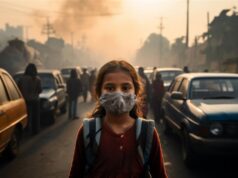
India now holds the fourteen most polluted cities in the world. Kanpur, in Uttar Pradesh, is at the top of the list. It has the world’s highest atmospheric concentration of PM2.5 (fine particulate matter), at 173 micrograms per cubic metre. India does not fare much better in lists based on PM10 pollution. Delhi is the world’s most polluted megacity in this regard, with Mumbai (India’s most populous city) in fourth place. Delhi also places sixth on the list of most polluted cities in terms of PM2.5 pollution.
Such high levels of pollution in the air can also imply significant amounts of pollution in nearby water supplies.
Bengaluru is one of the Indian cities where polluted water is causing severe issues. The city epitomises India’s current issues with drinking water. The Karnataka state capital – dubbed India’s ‘Silicon Valley’ – is one of ten global metropolises the Center for Science and Environment (CSE) says faces severe water shortages in the future.
Since 1973, a digital tech industry boom has seen built-up land in Bengaluru increase from eight to 73 percent according to Down to Earth magazine. Dr TV Ramachandra of the Indian Institute of Science, Bengaluru told Health Issues India that paved surfacing could cover 98.5 percent of Bengaluru’s landscape by 2025.
Contamination of groundwater, Dr Ramachandra claims, could be responsible for the rapid rise in chronic conditions in residents within the city.
Contaminated Indian Water, China To Blame?
The Brahmaputra river is being contaminated with bacteria and iron due to construction upstream in neighbouring China, claims Sarbananda Sonowal, chief minister of Assam.
The river originates in the Tibetan Himalayas, flowing from China into India, through Arunachal Pradesh and Assam before flowing into Bangladesh. Officials in India claim construction within the Chinese segment of the river has caused pollution so severe it is present at a detectable level as far downstream as Assam.
Laboratory testing of the river’s water within Assam has declared the water to be turbid and unfit for human consumption.
Despite these accusations, some rebuttals have pointed out that construction, as well as large scale deforestation is occurring along the Indian section of the river, and that this may also be playing a role in the river’s contamination.
Ground Water, A Depleting Resource
India will face severe shortages of water by 2050, a UNESCO report warns. This finding was backed up by a report published in The Lancet, which suggests that by 2050 India could be facing the very real threat of regular famine due to lack of groundwater.
Rivers and groundwater resources are becoming increasingly heavily polluted across the country. The Central Pollution Control Board identifies 275 Indian rivers as polluted – more than double the figure five years ago. The high levels of contamination across the country mean nineteen percent of the world’s people who lack access to clean water live in India.
In the short term, this could result in situations similar to that seen in Cape Town, in which a “day zero” situation was approached where drinking water would no longer be available within the city. With dwindling supplies of unpolluted water available, this could become a regular occurrence within India if the situations is not resolved.
Famine To Be Commonplace By 2050?
In the long term, the depletion of groundwater will lead to large scale reductions in agricultural output. In a country needing to feed a population exceeding a billion, the results of this could be catastrophic.
The Lancet study suggests a shift in dietary habits within the country could slow the depletion. They found that diets high in meat had the greatest impact on groundwater depletion, as not only do the animals themselves require water, crops used for animal feed also require vast amounts of groundwater.
Alongside this, wheat and rice consumption was also found to be a major contributor to groundwater depletion. The study suggests a shift towards vegetables and pulses as the bulk of the nations diet, as these foods were found to be the most ecologically friendly. As India — particularly in urban regions — shifts closer towards a western diet filled with fast food, this manner of dietary change appears a far less likely possibility.
Climate Change May Be Playing A Role In Depleting Water Sources
Water shortages are being seen as more of a common occurrences as temperatures and weather patterns change. Summers of recent years have been exceptionally hot, with heatwaves becoming more frequent across the country. In mid-March of 2018, 91 major reservoirs were at just 32 percent of their capacity.
Poor winter rains have left a number of India’s major river basins at a fraction of their water capacity. The capacity of the River Ganges basin – home to more than 400 million people – has dropped by 16.5 percent. The Sabarmati has fallen by 17.96 percent and the Tapi by 33.3 percent.
A UN report from 2018 has predicted a 1.5 °C temperature rise globally by 2040 – with potentially devastating implications for India’s water supply. As temperatures rise they do not do so in an even manner. The figure is simply an average. In reality such a rise implies that heatwaves and more drastic cold temperatures are likely to be more common. Both of these issues can have devastating effects on water supply, in turn affecting the ability to grow crops.
Water Treatment Of The Ganges
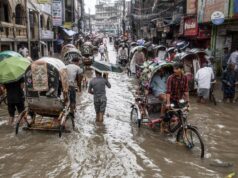
During the last election cycle, Prime Minister Narendra Modi ran a campaign to clean drinking water and invest funds into sanitising the famous Ganges river. A plan has been proposed to have funding over a five and ten year period. According to an article published in Bloomberg, India plans to invest 1.3 billion USD into a system of sewage treatment plant along the Ganges river with the aim to clean the water for 118 towns along the banks. Water drainage during storms or the monsoons remain an issue since many cities find themselves flooded due to poor drainage systems. Such floods and the stagnant water they leave behind can have ill effects on public health.
In 2018 the National Green Tribunal (NGT) has compared a dip in the Ganges to being as ‘injurious to health’ as a packet of cigarette. The risk of contracting infectious diseases from the Ganga water is high. The toxicity of the river is made significantly worse by industrial activity along the riverbanks.
Water As A Human Right
The UN General Assembly in July 2010 adopted a resolution acknowledging that clean drinking water and sanitation are integral to the realization of all human rights. It called upon all states and international organizations to provide financial resources, to help build capacity and transfer technology specially to the developing countries to provide safe, clean, accessible and affordable drinking water and sanitation to all.
India voted in favour of this resolution, though there are currently no large scale plans by the centre to implement the policy. Water supplies are handled by the states, with disparities occurring between them in terms of quality of water. Despite voting in favour of the resolution, India is far from providing clean water to all its citizens as a basic human right.